The biggest surprise for me in this final weeks reading was probably the supreme importance of customer loyalty. Obviously customer loyalty is important, but I figured it was more of a 'bonus' than an essential tool for growth. Though I guess having people you can rely on to come back for repeat business would be very important.
The bit about sending loan information via text messages confused me. It seemed a somewhat sub-par way of relating important information like that, and certainly not the way I'd wish to receive such information. If I could ask the author any two questions, I'd ask for more info about the motivations for using microfinance as a tool against poverty, and the success rate in using such ventures in a more focused, local environment. There was nothing in particular I disagreed with the author on, though I would like to see a bit more info on the success rate of microfinancing.
Saturday, April 23, 2016

Final Reflection
After browsing through the blog I've kept over the past semester, a few moments stick out. I think my favorite activity I did was interviewing people in my demographic about my venture idea. It was kind of scary but a lot of fun and taught me a lot about conducting interviews. I remember dreading the first entrepreneur interview I did, but it was a lot easier the second time around. I think overall the in person interviews were the most formative experiences for me, I really learned a lot about getting over my insecurities and approaching people, which is useful in and out of the business world.
I suppose I definitely see myself as more of an entrepreneur than I did at the beginning. I wouldn't call myself a full fledged entrepreneur, what with haven't actually started a business, but I definitely feel more comfortable and in-tune with that sort of mindset. If I were to give advice to future students in this course, the number one piece of advice would be to not be too afraid to leave your comfort zone. Its essential for success and for growing as an entrepreneur and a person overall. If you let go of your insecurities a bit, you'll find yourself having a lot of fun!

I suppose I definitely see myself as more of an entrepreneur than I did at the beginning. I wouldn't call myself a full fledged entrepreneur, what with haven't actually started a business, but I definitely feel more comfortable and in-tune with that sort of mindset. If I were to give advice to future students in this course, the number one piece of advice would be to not be too afraid to leave your comfort zone. Its essential for success and for growing as an entrepreneur and a person overall. If you let go of your insecurities a bit, you'll find yourself having a lot of fun!
Thursday, April 21, 2016
Elevator Pitch No. 4
In my 4th elevator pitch I made a significant effort to include the feedback I had gotten for my venture idea in other assignments. Specifically, I included the feedback about how my app would be paid for and how I could offer it as a service package to schools to offer to their students. I feel that adding these pieces of feedback significantly improved my overall elevator pitch.
https://www.youtube.com/watch?v=HayXdB6T1SQ&feature=youtu.be
https://www.youtube.com/watch?v=HayXdB6T1SQ&feature=youtu.be
Wednesday, April 20, 2016
Venture Concept No. 2
My venture concept idea is an app targeted at college students for planning out their semesters schedule, viewing degree audits, and viewing class catalogs. The app is called AdviseMe. This is meant to alleviate the problem many college students face which is long waits and inconvenient hours to see their advisers. This app will replace the need to see these advisers for basic questions about class schedules and what is needed for their degree. The app will make money via ad-support, and an optional 1 dollar fee to remove ads permanently. Our 'secret sauce' is the convenience factor of exploiting the prevalence of technology among the college demographic to solve a very common problem. In the future, I would like to expand this venture by selling it as service packages to colleges for them to provide to their students free of charge. I would like to manage this venture for awhile, and eventually sell it off.

The primary feedback I received while talking about this venture with people was positive. People in my targeted demographic agreed that they would find such a product useful. Originally I was going to charge everyone for the app, but feedback suggested that I make it free with ads with an optional buy in to appeal to college students more. Additionally the idea to sell as a package to schools was an idea I gained from feedback with a professor at UF.

The primary feedback I received while talking about this venture with people was positive. People in my targeted demographic agreed that they would find such a product useful. Originally I was going to charge everyone for the app, but feedback suggested that I make it free with ads with an optional buy in to appeal to college students more. Additionally the idea to sell as a package to schools was an idea I gained from feedback with a professor at UF.
Sunday, April 17, 2016
Week 14 Reading Reflection
In this weeks reading I was somewhat surprised by just how useful an entrepreneurship philosophy is to have. It makes sense when I think about it, but the extent to which it can be used to help your venture succeed was a surprise to me. I was confused with the author's stance on nepotism, I was always under the assumption that it was a bad and ethically dubious thing to practice. If I could ask two questions of the author I would first ask if there are legal situations where nepotism could get you into trouble. I would also ask what sort of entrepreneurial 'mindsets' are most important for a fresh entrepreneur to take. There was nothing I really disagreed with this week, excluding the issues I had with the nepotism.
Google Gold
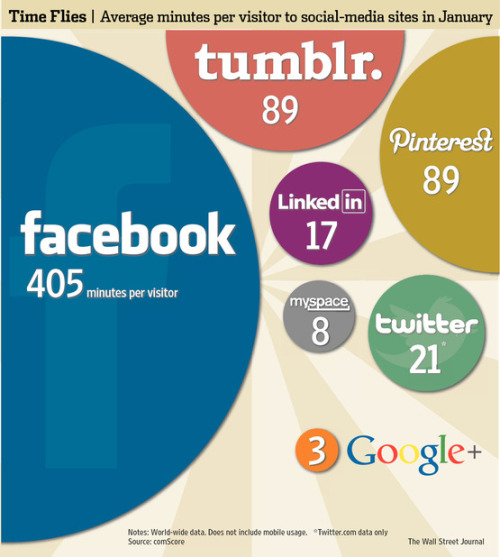
The main strategy I used in my blog posts for SEO purposes was to try to have tags that accurately describe the variety of terms someone might use to search for my blog post. This would include the name and words in the title, such as for this post Google and Gold, as well as general tags such as business and UF. I tried to use more keywords as the semester went on. They are free to use, after all and it doesn't hurt to add more tags. I tried using social media once or twice to share my posts, but my social circle on Facebook doesn't really care about my school assignments. I used the built in share functionality to share a few posts on Google+, but I don't think anyone actually uses Google+. Overall I'd say social media ignored my blog posts, which I am not really surprised by. If I was one of my friends seeing me post assignments on Facebook, I probably wouldn't read them either.

My most "viral" post was the Unfair Advantage assignment with 31 view. I think it reached this number because multiple people decided to comment on it, presumably for their assignments. I tried searching for this blog post using the name and all the tags, but there were over 30,000 results and after thumbing through around 20 pages of search results I was unable to find it.
My most "viral" post was the Unfair Advantage assignment with 31 view. I think it reached this number because multiple people decided to comment on it, presumably for their assignments. I tried searching for this blog post using the name and all the tags, but there were over 30,000 results and after thumbing through around 20 pages of search results I was unable to find it.
Wednesday, April 13, 2016
Very Short Interview, Part 2
In my first interview with Mr. Tobin, I asked him basic questions about entrepreneurship, like what does it mean to be an entrepreneur, what does he wish he knew before he started, and what I should try to get out of this course. In retrospect a lot of his answers, like the importance of networking, seem almost obvious in hindsight. However I can remember being surprised at the time. I guess this just shows what I've managed to learn over the following months since the interview.
I set up a chat with Mr. Tobin over the phone to ask him three new questions now that I have new found perspective thanks to this course.
1. How much of your entrepreneur mindset is unique to your field, and how much is universal?
He told me that he believes a great deal of entrepreneurial skill is universal. Things like market research, interviewing potential customers, and managing your business transfer between almost every field. There are specific tricks to every trade of course, but a great deal is universal.
2. What do you think is the major point of failure for fresh entrepreneurs?
He said that is absolutely would have to be lack of understanding of the market. Many entrepreneurs have what seem like amazing ideas, but totally mismanage it when it comes to finding a receptive demographic or delivering in a way that is attractive to customers.
3. What do you think the single most important skill as an entrepreneur is?
Lack of a fear of failure. There is almost no such thing as a sure bet, and risk is proportionate to reward. Don't be afraid to fail! (But make sure potential failure won't ruin you.)
I felt a lot more comfortable conducting this interview the second time around. Partly because I had already interviewed Mr. Tobin before, but also because I have done so much interacting and interviewing throughout this course that I was used to it. He was also impressed on the quality of my questions, he thought they were very direct and no-nonsense. I attribute this to my experience in this course.
I set up a chat with Mr. Tobin over the phone to ask him three new questions now that I have new found perspective thanks to this course.
1. How much of your entrepreneur mindset is unique to your field, and how much is universal?
He told me that he believes a great deal of entrepreneurial skill is universal. Things like market research, interviewing potential customers, and managing your business transfer between almost every field. There are specific tricks to every trade of course, but a great deal is universal.
2. What do you think is the major point of failure for fresh entrepreneurs?
He said that is absolutely would have to be lack of understanding of the market. Many entrepreneurs have what seem like amazing ideas, but totally mismanage it when it comes to finding a receptive demographic or delivering in a way that is attractive to customers.
3. What do you think the single most important skill as an entrepreneur is?
Lack of a fear of failure. There is almost no such thing as a sure bet, and risk is proportionate to reward. Don't be afraid to fail! (But make sure potential failure won't ruin you.)
I felt a lot more comfortable conducting this interview the second time around. Partly because I had already interviewed Mr. Tobin before, but also because I have done so much interacting and interviewing throughout this course that I was used to it. He was also impressed on the quality of my questions, he thought they were very direct and no-nonsense. I attribute this to my experience in this course.
Sunday, April 10, 2016
Reading Reflection Week 13
I was surprised in how much the emotional aspects of running a business can contribute to success and failure, obviously emotional health is important for the individual but I hadn't considered the impact it can also have on the business. Nothing in particular confused me, overall I thought the author did a fantastic job laying out everything. If I could ask two questions of the author I'd ask them how in depth should checklists be to be useful and also can being too committed be harmful in a business/entrepreneur environment
Celebrating Failure
One time I experienced failure this semester was in one of my science classes, biochemistry specifically. I studied very hard for the first exam, the kind of studying that has always seen me through in the past, and I did very poorly on the test, and was crushed. What I learned from this experience is that it takes different methods for studying, and that I would need different studying tactics to help me pass the class, which I used in subsequent exams for that class and others like it.
I don't always handle the best, I tend to beat myself up about failure and despair about what it means for my future, even if its relatively inconsequential in the grand scheme of my life and my goals. I would definitely say that this class has made me less risk and failure averse, now that I know the importance that willingness to fail and take risks is in life and entrepreneurship.
I don't always handle the best, I tend to beat myself up about failure and despair about what it means for my future, even if its relatively inconsequential in the grand scheme of my life and my goals. I would definitely say that this class has made me less risk and failure averse, now that I know the importance that willingness to fail and take risks is in life and entrepreneurship.
Wednesday, April 6, 2016
My Exit Strategy
If I had to plan out an exit strategy for this venture, I would probably wish to sell it within several years for a tidy profit. My reasoning for this is that technology, and especially phone applications, is an extremely rapidly shifting market space. On top of that, my demographic is young college students, a demographic with rapidly changing tastes and needs. Even if I came up with a great idea here and now, its not likely it will stay that way, or that I will be able to continue to come up with more ideas to target the same marketplace. By getting out and selling early, I avoid the problems that come with my venture aging while still making a profit.

I'm not entirely sure if this exit strategy has meaningfully impacted by business strategy. I'm not shifting to short-term plans in lieu of long-term plans because I know I'll be out of the game sooner rather than later. Its more that I recognize my venture idea is highly dependent on time and place and I want to only be in that business for as long as that time and place lasts. Besides that though, it has not affected by strategy.
I'm not entirely sure if this exit strategy has meaningfully impacted by business strategy. I'm not shifting to short-term plans in lieu of long-term plans because I know I'll be out of the game sooner rather than later. Its more that I recognize my venture idea is highly dependent on time and place and I want to only be in that business for as long as that time and place lasts. Besides that though, it has not affected by strategy.
Sunday, April 3, 2016
Week 12 Reading Reflection
During this weeks reading, I was first most surprised by the various descriptions of just how bad things could go for an entrepreneur without proper strategic planning. Obviously planning is important, but just how bad things could go when you wing it was entertaining to read. I was somewhat confused by how the strategic matrix was laid out, but I figured it out and grokked to it after a little while of examining it. If I could ask the author two questions, it would be the aspects of a successful strategic matrix, and the common pitfalls people run into while developing their matrix. I wasn't really confused by any aspect of the reading, besides that bit with the strategic matrix.
What's Next?
NOTE: I had an issue where my video files for the interviews were corrupted. I'm trying to get it fixed and will update with links once I do. Until then, I did my best to summarize and transcribe the interviews.
Existing Market
I believe the future for the market I am making my app in has to include features like syncing with other calendar and planning applications, voice functionality ala Siri, and expanded coverage of more schools and universities.
Interviewee one stated that they believe that working with every major university and community college would be an important future step for an app like mine. They agreed that syncing with other apps would be very useful for planning purposes
Interviewee two said that what she thinks would be most important is usability, and having non-mobile versions of the app for more serious use. They thought that working with Siri and following voice commands would be an attractive feature
Interviewee three said that he would want to be able to plan out semesters between different schools, such as taking classes at UF in the fall and at a community college in the summer. They agreed that being able to sync with calendar apps would be convenient.
With this feedback, I have decided that the most important avenue for the future is expansion, both in terms of coverage and in places where the app can be used. Syncing between desktop, mobile, and other calendar and planning apps would allow my app to be as non-intrusive and convenient to people as possible, making it a more attractive option to everyone.
New Market
I believe that it could be possible to modify this venture to target schools as the primary market, and not students. Schools could provide the app to students as a feature in their advising program, making their school more attractive and student friendly. I would imagine being able to sell a license rather than individual copies of the app would be important here
Interviewee one said the most important thing would be bug testing and uniformity, as it would have to work in as broad a selection of hardwares as possible, and have no bugs as people would be depending on it for planning their academic schedule.
Interviewee two said the most important thing would in fact having an attractive package to sell schools, with a scalable model for selling licenses and being able to provide tech support and make custom additions to the feature set for different clients.
Interviewee three said that if they were evaluating purchasing this product for their program, a variety of language and dialect options for working with a broad and diverse student body would be vital. Additionally, it should be simple to use so even tech-illiterate teachers and students could navigate and use the program successfully.
What I learned from this second set of interviews is that the most important thing for selling to this sort of user base isn't flashy features, but dependability and accessibility. If you are a large school program purchasing this app, you want to make sure almost everyone can use it, both from a personal and technological standpoint. I had not considered this when thinking purely from the standpoint of tech savvy college students.
Existing Market
I believe the future for the market I am making my app in has to include features like syncing with other calendar and planning applications, voice functionality ala Siri, and expanded coverage of more schools and universities.
Interviewee one stated that they believe that working with every major university and community college would be an important future step for an app like mine. They agreed that syncing with other apps would be very useful for planning purposes
Interviewee two said that what she thinks would be most important is usability, and having non-mobile versions of the app for more serious use. They thought that working with Siri and following voice commands would be an attractive feature
Interviewee three said that he would want to be able to plan out semesters between different schools, such as taking classes at UF in the fall and at a community college in the summer. They agreed that being able to sync with calendar apps would be convenient.
With this feedback, I have decided that the most important avenue for the future is expansion, both in terms of coverage and in places where the app can be used. Syncing between desktop, mobile, and other calendar and planning apps would allow my app to be as non-intrusive and convenient to people as possible, making it a more attractive option to everyone.
New Market
I believe that it could be possible to modify this venture to target schools as the primary market, and not students. Schools could provide the app to students as a feature in their advising program, making their school more attractive and student friendly. I would imagine being able to sell a license rather than individual copies of the app would be important here
Interviewee one said the most important thing would be bug testing and uniformity, as it would have to work in as broad a selection of hardwares as possible, and have no bugs as people would be depending on it for planning their academic schedule.
Interviewee two said the most important thing would in fact having an attractive package to sell schools, with a scalable model for selling licenses and being able to provide tech support and make custom additions to the feature set for different clients.
Interviewee three said that if they were evaluating purchasing this product for their program, a variety of language and dialect options for working with a broad and diverse student body would be vital. Additionally, it should be simple to use so even tech-illiterate teachers and students could navigate and use the program successfully.
What I learned from this second set of interviews is that the most important thing for selling to this sort of user base isn't flashy features, but dependability and accessibility. If you are a large school program purchasing this app, you want to make sure almost everyone can use it, both from a personal and technological standpoint. I had not considered this when thinking purely from the standpoint of tech savvy college students.
Subscribe to:
Comments (Atom)